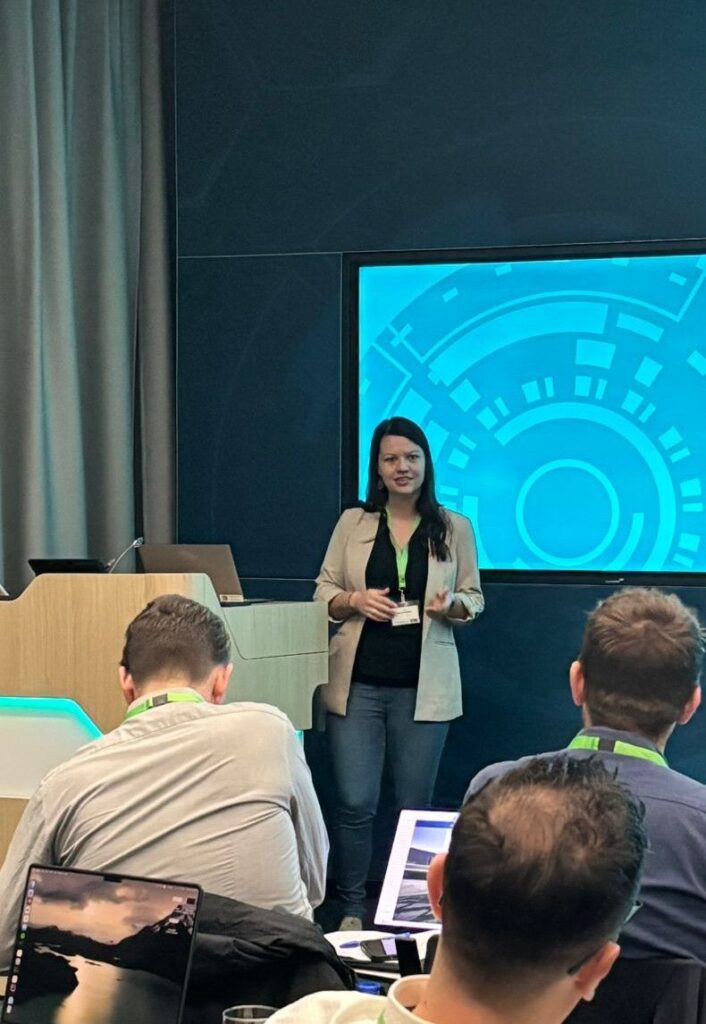
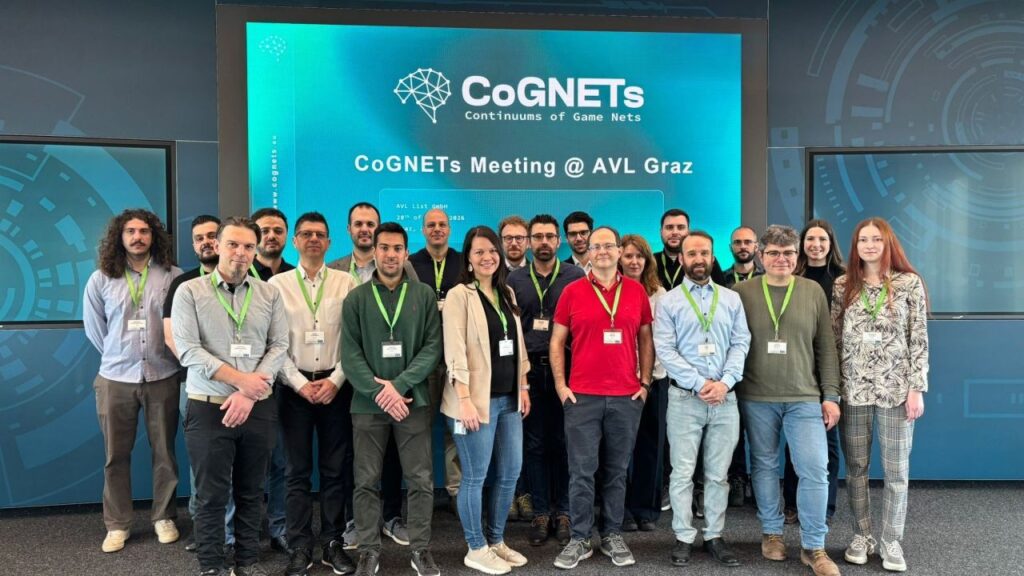
The CoGNETs consortium came together on 28–29 April 2026 at AVL headquarters in Graz, Austria, for its 4th Plenary Meeting. As the project approaches its midpoint, the meeting provided an opportunity for partners to assess progress, align ongoing activities, and prepare for the next stage of technical integration and validation. The consortium would like to thank AVL for hosting the meeting and providing an excellent environment for two days of productive discussions.
Across the two-day programme, a common theme emerged: CoGNETs is steadily moving from the development of individual technologies towards bringing them together into an integrated platform for distributed AI across the cognitive computing continuum.
This transition was reflected in the technical sessions. Partners shared the latest developments on collaborative smart nodes, presenting advances in game-intelligent agents, collaborative federated learning, and mechanisms for security, privacy and resilience. Rather than considering these technologies in isolation, discussions focused on how they interact to enable autonomous decision-making in heterogeneous computing environments spanning IoT devices, the edge and the cloud.
Building on these foundations, attention shifted to the middleware infrastructure that will connect these components into a coherent system. Updates covered decentralised communication mechanisms, distributed runtime environments and context-aware middleware designed to support dynamic coordination across the computing continuum. Together, these developments are laying the groundwork for scalable and adaptive AI services capable of operating across highly distributed environments.
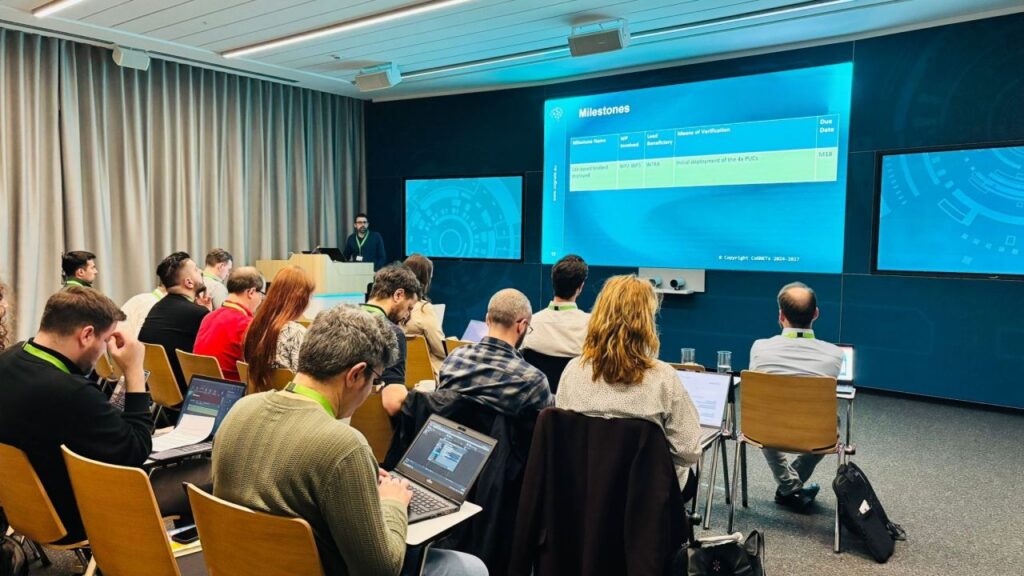
With many of the project’s core technologies continuing to mature, the discussion naturally turned to integration. Partners reviewed preparations for the project’s TRL5 testbeds, the deployment of pilot use cases and the validation methodology that will demonstrate CoGNETs technologies in realistic application scenarios. These activities mark an important step towards showing how the project’s research can translate into practical solutions for domains such as manufacturing, mobility and healthcare.
Alongside the technical programme, the consortium also reviewed communication, dissemination, exploitation and standardisation activities. Beyond sharing research results, partners discussed how to strengthen collaboration with other Horizon Europe initiatives, increase engagement with stakeholders, and maximise the long-term impact of the project’s outcomes through scientific dissemination and future exploitation opportunities.
The meeting concluded with updates on project management, technical coordination, quality assurance and legal and ethical aspects, ensuring that all activities remain aligned as CoGNETs progresses towards its next milestones.
The discussions in Graz highlighted not only the technical progress achieved over the past months but also the value of bringing together expertise from across the consortium. As development moves increasingly towards integration, demonstration and validation, this close collaboration will continue to play a central role in delivering CoGNETs’ vision of resilient, trustworthy and collaborative AI operating across the cognitive computing continuum.